Planning a Central Florida vacation home and torn between Davenport and Kissimmee? You’re not alone. Both offer strong rental demand near Orlando’s theme parks, but the right fit depends on how you’ll use the property, your budget, and the rules that govern short-term rentals. In this guide, you’ll compare drive times, property styles, STR regulations, taxes, and ownership costs so you can decide with confidence. Let’s dive in.
Davenport vs. Kissimmee: Quick take
If quick access to Walt Disney World and Orlando International Airport (MCO) is your top priority, Kissimmee generally wins on proximity. It often sits closer to park entrances and airport routes, which can help with guest convenience and marketing. According to local travel resources, many Kissimmee neighborhoods are about 20 to 30 minutes from Disney and roughly 15 to 20 driving miles to MCO, depending on exact starting points and traffic. You can explore typical park transfer options in the area on the official visitor site for Kissimmee. For owners who prefer a little more space and slightly quieter resort settings, Davenport provides a short-drive alternative along the US‑27 and I‑4 corridors that still reaches Disney in about 20 to 30 minutes from many communities. Check representative drive distances such as Davenport to Disney World on TravelMath for a reality check by address.
Park and airport proximity
- Kissimmee to Disney: Frequently around 10 to 15 miles and about 20 to 30 minutes from central Kissimmee spots to park entrances, depending on traffic patterns. See practical tips for getting to major parks from Kissimmee on the area’s tourism site.
- Davenport to Disney: Often in the 15 to 25 mile range, roughly 20 to 30 minutes from many Davenport neighborhoods. Because Davenport is spread out, verify address-level drive distances to Disney using tools like TravelMath.
- Kissimmee to MCO: Many Kissimmee addresses are about 15 to 20 driving miles to Orlando International Airport. TravelMath’s Kissimmee-to-MCO page is a helpful reference for mileage and routing.
What this means for your guests: Kissimmee’s proximity can shorten transfers and simplify park-day logistics. Davenport’s tradeoff is a touch more driving in exchange for newer resort-style master plans and a less congested feel in certain pockets.
What you’ll find: Home types and communities
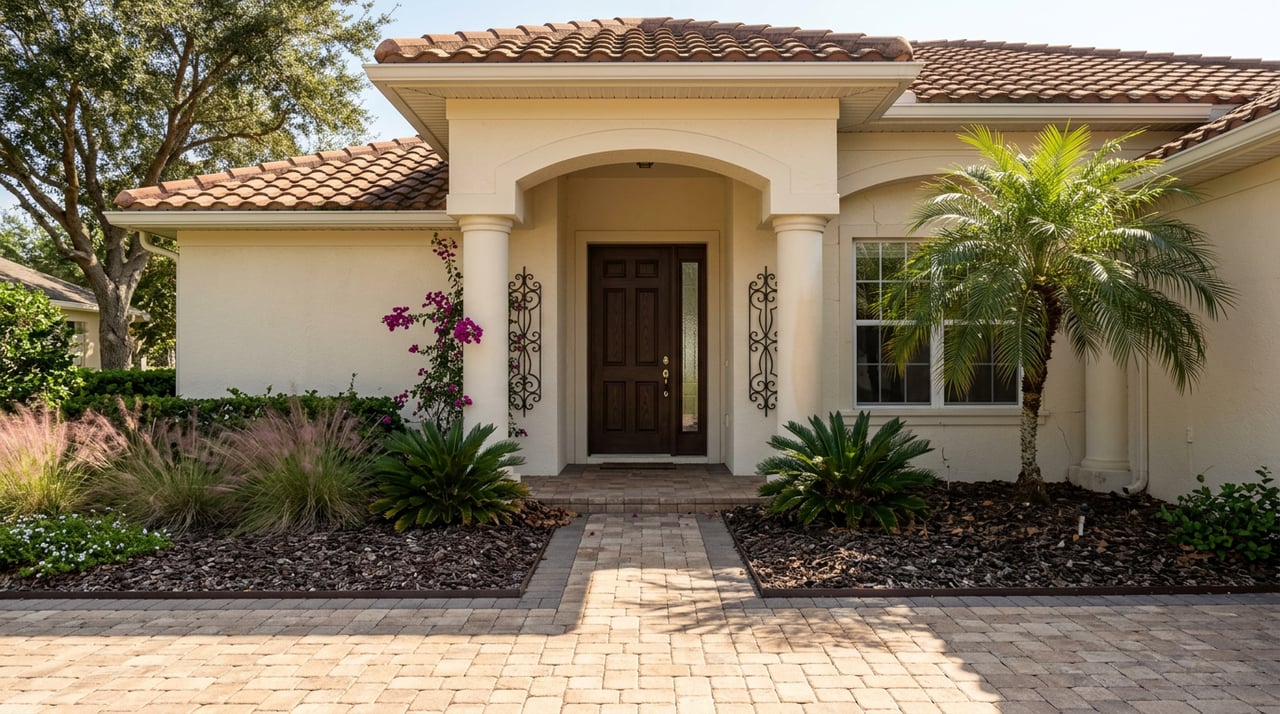
- Davenport: You’ll see many resort-style gated communities with single-family villas and townhomes marketed for vacation use. Floor plans often include multiple bedrooms, private screened pools, and group-friendly layouts.
- Kissimmee: You’ll find a wide range, from high-volume condo and townhome resorts close to US‑192 to large single-family villas purpose-built for vacation rentals. Several established neighborhoods cluster near key park approaches, which appeals to park-centric guests.
Both areas include communities designed for short-term rentals, but rules vary by location and by homeowners association. Always verify the address, zoning, and HOA details before you buy.
Rules that matter: STR zoning, licensing, and taxes
Short-term rentals are common in both Davenport and Kissimmee, but the details change across city and county lines. Treat this as a must-check item for every property on your shortlist.
State tax baseline
Florida treats accommodations rented for six months or less as taxable transient rentals. You’ll register with the state and file the 6 percent state sales tax on transient rentals. The Department of Revenue’s DR‑15TDT and DR‑15DSS forms outline county-by-county transient taxes and local surtax basics.
- Review state transient rental tax guidance on the Florida Department of Revenue’s official DR‑15TDT document.
- See county discretionary sales surtax details on the DR‑15DSS overview from the Florida Department of Revenue.
County lodging taxes: Polk vs. Osceola
- Polk County (Davenport): Polk collects a 5 percent Tourist Development Tax (TDT). The Polk County Tax Collector explains how to register and remit the TDT.
- Osceola County (Kissimmee): Osceola collects a 6 percent TDT and actively audits compliance. The Osceola Tax Collector provides compliance guidance for owners and managers.
In addition to state sales tax, each county may have a discretionary surtax. Combined lodging tax rates are commonly higher in Osceola than in Polk. Build all taxes into your nightly rate strategy and confirm which party remits each element if you use booking platforms.
Local zoning and licensing
- City of Davenport: The city’s Unified Land Development Regulations include a section dedicated to short-term rental units (Section 4.03.19). It details where STRs are permitted and outlines safety and compliance steps. Review the City of Davenport’s ULDR and confirm the process with Community Development before moving forward.
- Osceola County/Kissimmee: Osceola uses a Short‑Term Rental Planned Development overlay to designate where STRs are allowed. If a parcel lies outside the overlay, short-term rentals may be restricted. Start with Osceola County’s STR overlay resources and then verify any additional requirements with the City of Kissimmee when the property is inside city limits.
HOA rules can override your plans
Many resort communities in both Davenport and Kissimmee use covenants, conditions, and restrictions that govern or ban short-term renting, set minimum-stay lengths, or require owner registration. Always obtain and review the HOA’s CC&Rs and written rental policies. HOA restrictions often go beyond municipal rules.
Market demand and income potential
Both Davenport and Kissimmee benefit from year-round visitor demand driven by Orlando’s parks, seasonal events, and group travel. Kissimmee typically has a larger cluster of purpose-built vacation communities closer to the parks, which can raise revenue potential but also increase competition. Davenport’s resort pockets often perform well too, sometimes with slightly lower purchase prices for similar bedroom counts.
Short-term rental performance data varies by source. Analytics providers like AirDNA publish market estimates and trends, but numbers should be cross-checked with multiple sources and local managers. As a general rule of thumb, providers often report occupancy in the 60 to 70 percent range annually for these submarkets, with higher average daily rates and total revenue for larger homes. Use these figures only as a starting point and validate them with community-specific comps. For a primer on how third-party STR data is built and interpreted, review AirDNA’s market data overview.
Operating costs and management
Vacation rentals are more hands-on than long-term leases. Most out-of-area owners hire a local property manager to handle guest communication, turnovers, maintenance, and tax filings. Management fees, utilities, pool care, lawn service, and HOA dues can be significant. Run a full pro forma that includes:
- Management fees and booking platform fees
- Utilities, internet, pest control, pool and lawn service
- HOA dues and amenity fees
- Lodging taxes and state sales tax
- Routine maintenance and capital reserves for systems and furnishings
Rates and costs vary by community, so build your budget with quotes from more than one manager.
Insurance, floods, and storm planning
Davenport and Kissimmee are inland and not exposed to coastal storm surge, but they still face wind, heavy rain, and localized flooding from tropical systems. Lenders may require flood insurance if the property is in a Special Flood Hazard Area. Always check the FEMA flood map for the specific address and request any existing elevation certificates. Osceola County’s floodplain program can help you obtain flood map services and written determinations. Factor hurricane deductibles and wind coverage into your insurance quotes as part of your underwriting.
Due-diligence checklist before you buy
Use this step-by-step list to reduce surprises and protect your investment plan.
Confirm where the property sits. Identify whether the parcel is in city limits or unincorporated county. For Osceola County, confirm whether it lies inside the Short‑Term Rental overlay using county resources. For addresses in the City of Davenport, review ULDR Section 4.03.19 to confirm STR eligibility.
Verify HOA rules in writing. Request the CC&Rs and any rental addenda. Look for bans, minimum-stay requirements, owner-registration steps, signage rules, and guest behavior policies. HOA restrictions can be stricter than local codes.
Register and plan for taxes. Budget for state sales tax at 6 percent, your county’s discretionary surtax, and the county TDT. Review the Florida Department of Revenue’s DR‑15TDT and DR‑15DSS, Polk County’s TDT procedures, and Osceola’s TDT compliance guidance. Clarify who remits which tax elements if you use platforms or a manager.
Confirm local licenses. Ask the city or county about any required business tax receipts, STR permits, and inspections. For Davenport, work with Community Development and Polk County. For Kissimmee-area properties, check with the City of Kissimmee and Osceola County.
Check flood and insurance early. Pull a FIRMette for the address and obtain quotes for homeowners, wind/hurricane, and flood (if applicable). Osceola County’s flood map services are a good model for what to request in either county.
Underwrite revenue with multiple sources. Use estimates from at least two STR data providers and sample real listings for bedroom-count and amenity comps. AirDNA’s methodology overview is a helpful starting point, but rely on local property managers for final revenue assumptions.
Align financing with intended use. Tell your lender you’re buying a vacation rental. Investment properties can require larger down payments and different underwriting than second homes or primary residences.
Real-world distance context: two useful checks
- Davenport to Disney World: Verify the drive distance and typical routing from your specific Davenport address with TravelMath’s Davenport-to-Disney tool. Neighborhoods spread along US‑27 and I‑4 can have different times based on traffic.
- Kissimmee to MCO: For travel-day planning and guest transfers, check mileage and routes from Kissimmee to Orlando International Airport using TravelMath.
Short, accurate drive notes in your listing can set guest expectations and boost reviews, whether you choose Davenport or Kissimmee.
Which is right for you?
Choose Kissimmee if you want the shortest transfers to parks and airport hubs, a dense supply of vacation communities, and strong park-centric demand. Choose Davenport if you prefer resort-style neighborhoods that can feel less congested, larger floor plans for the money in some pockets, and you’re comfortable with a few more drive minutes.
Either way, the winning strategy is to confirm STR legality at the parcel level, align your budget with every operating cost and tax, and ground your revenue model in multiple data sources. With those steps in place, you’ll be set up to enjoy the home yourself and meet your income goals.
Ready to compare communities and run the numbers for your plan? Reach out to the local team that serves Davenport, Kissimmee, and the wider Orlando corridor. Connect with Forteza Realty LLC for bilingual guidance, neighborhood insights, and a step-by-step path from search to closing.
FAQs
Is Kissimmee or Davenport closer to Walt Disney World?
- Kissimmee generally sits closer, often about 20 to 30 minutes from many central neighborhoods, while Davenport addresses commonly range 20 to 30 minutes depending on location and traffic. See visitor routing tips for Kissimmee on the official tourism site and confirm exact times by address.
Where are short-term rentals allowed in Kissimmee?
- Osceola County uses a Short‑Term Rental Planned Development overlay to designate areas where STRs are permitted; verify parcel status with the county’s STR overlay resources and confirm any additional rules inside the City of Kissimmee.
What lodging taxes apply in Davenport (Polk) vs. Kissimmee (Osceola)?
- Both require the 6 percent state sales tax on transient rentals. Polk County adds a 5 percent Tourist Development Tax, and Osceola County adds a 6 percent TDT. Check the Florida DOR’s DR‑15TDT and the Polk and Osceola tax collector pages for current procedures.
Do I need a special license or inspection to run an STR?
- Possibly. Requirements vary by city and county. The City of Davenport outlines STR provisions in its Unified Land Development Regulations, and Osceola County uses an STR overlay with local compliance steps. Always request written guidance for your exact address.
How do HOA rules affect short-term rentals?
- HOAs can allow, limit, or ban STRs regardless of city or county allowances. Ask for the CC&Rs and any rental policy documents, and look for minimum-stay rules, registrations, and guest conduct requirements.
How far is Kissimmee from Orlando International Airport (MCO)?
- Many Kissimmee neighborhoods are about 15 to 20 driving miles from MCO. Use TravelMath’s Kissimmee-to-MCO reference to check mileage and routing from a specific address.
How should I estimate occupancy and revenue?
- Start with data from more than one STR analytics source, then validate with local property managers and comparable listings. For methodology context and market scale, review AirDNA’s market data overview and treat any figures as estimates until verified.