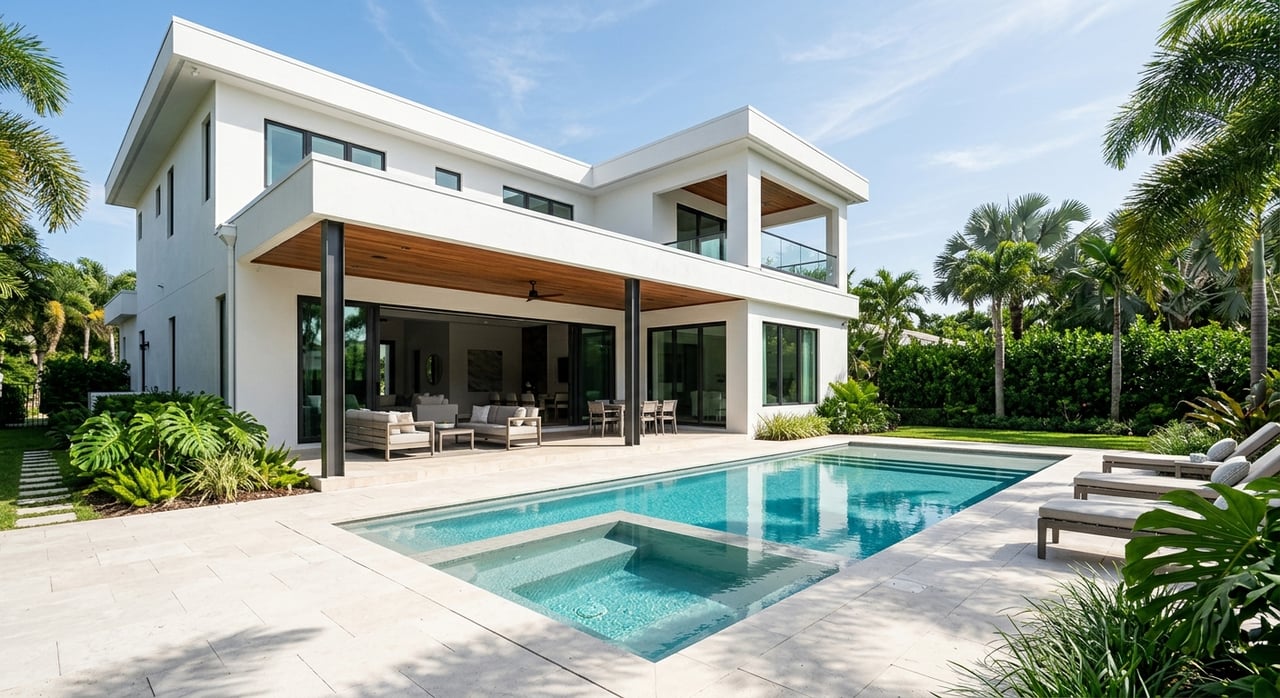
Thinking about buying in Davenport and wondering whether a vacation home or a long-term rental makes more sense? You are not alone. This is one of the most important questions buyers and investors ask in Central Florida, especially in a market that sits near major tourism demand but also has a fast-growing resident base. If you want to choose the strategy that fits your goals, budget, and workload, this guide will help you compare both paths clearly. Let’s dive in.
Why Davenport gets attention
Davenport has grown quickly, and that growth is part of what makes it appealing. Census QuickFacts estimates the city had 16,764 residents in 2025, which is a 79.4% increase from the 2020 census. That kind of growth can support housing demand and keep Davenport on the radar for both buyers and investors.
At the same time, Davenport is not driven by just one type of housing demand. The same Census source reports an 89.3% owner-occupied housing rate, which suggests the city proper is not mainly a renter-dominant market. For you, that means the best investment choice often depends on the exact property and location, not just the city name.
Regional tourism also plays a role. Davenport is described as less than 10 miles southwest of Disney World and as a convenient lodging option for visitors to the area. Visit Orlando reported 76.7 million visitors in 2025, with an average leisure stay of 2.9 nights, which helps explain why short-stay demand exists in this part of Central Florida.
Davenport numbers to know
If you are comparing strategies, the local numbers matter. Zillow’s May 2026 snapshot shows average rent around $2,040 and an average home value of about $341,159. Redfin’s May 2026 market page puts the median sale price near $322,257.
Those figures show a market with a real buy-in cost and a real rental base. Census QuickFacts also lists median gross rent at $1,914. In simple terms, Davenport offers enough demand to support rental decisions, but not every property will perform the same way under every model.
When a vacation home may fit
A vacation home or short-term rental often appeals to buyers who want flexibility. You may want a property that you can use personally at certain times of year while also offering it to short-stay guests. That model can be attractive in Davenport because of the area’s connection to regional tourism.
AirDNA’s June 2026 Davenport snapshot estimates 12,015 active short-term rental listings, a 55% average occupancy rate, a $257 average daily rate, and about $28,000 in average annual revenue before host expenses. AirDNA also gives Davenport a 90 out of 100 market score and an 83 out of 100 seasonality score. Those figures suggest real short-term rental demand, but they also point to competition and seasonal swings.
That is the key tradeoff. A vacation rental can generate higher gross income than a standard lease, but that upside is not guaranteed. It depends on your specific address, the type of home, and how well the property can compete in a crowded field.
The revenue gap is smaller than many expect
On paper, the short-term rental path may look like the obvious winner. But when you compare simple gross revenue, the difference is narrower than many buyers expect. Zillow’s average rent implies roughly $24,480 per year, while AirDNA’s average annual short-term rental revenue is about $28,000.
That is only about a 14% premium before you account for higher operating costs. If you need furniture, frequent cleaning, restocking, guest messaging, maintenance coordination, and active pricing management, that extra gross revenue can shrink quickly. In other words, a vacation home is not automatically the more profitable option.
Vacation homes come with more compliance layers
In Florida, a vacation rental is generally a whole-unit condo, co-op, single-family, or one- through four-family dwelling that is rented more than three times a year for fewer than 30 consecutive days, or advertised that way. Under Florida DBPR rules, that type of property generally needs a DBPR vacation rental license.
If you are only renting a room in your personal residence, the licensing rule may be different. Still, local rules may apply. Before you buy, you should confirm exactly how the home will be used and whether that use triggers state or local requirements.
In Polk County, transient accommodations rented for six months or less are subject to a 5% Tourist Development Tax, and the county tax collector says it is remitted monthly. Florida transient-rental rules also add state sales tax and any applicable county surtax. Polk County budget materials note a half-cent discretionary sales surtax.
If the property is inside Davenport city limits, the city says businesses operating inside the city owe an annual business tax receipt. The city also notes that this is separate from licensure or certification and that zoning approval matters. That means your property’s exact location can change the compliance picture.
Homestead benefits usually do not apply
One detail many buyers overlook is property tax treatment. In Florida, a vacation-use property generally does not qualify for homestead treatment unless the owner makes it a permanent residence. That matters because homestead status can reduce taxable value.
If you are deciding between a primary home and a vacation-use property, this can affect your long-term carrying costs. It is another reason to run the numbers carefully before you commit to a short-term strategy.
When a long-term rental may fit
A long-term rental usually works best when your goal is steadier occupancy and less hands-on management. Instead of managing guest turnover every few days, you are typically working with a longer lease cycle and fewer moving parts. That can make planning and budgeting easier.
Florida transient-rental taxes apply to rentals of six months or less, so a 12-month lease generally avoids the tourist-tax layer. You would still need to plan for normal ownership costs such as mortgage, property taxes, insurance, repairs, vacancy, leasing, and management. But the operating rhythm is often more stable.
For many buyers, that stability is the main benefit. A long-term rental may not have the same headline income potential as a vacation home, but it can be simpler to operate and easier to forecast month to month.
Davenport still has real rental demand
It is easy to focus on tourism and forget that Davenport also has a resident renter base. Zillow’s average rent of about $2,040 and Census median gross rent of $1,914 support that. The city’s rapid population growth also suggests rental demand should not be dismissed.
At the same time, the 89.3% owner-occupied rate is worth paying attention to. That does not mean long-term rentals are a poor fit. It means some neighborhoods may align better with owner-occupants or longer-term tenants than with a high-turnover vacation strategy.
How to decide between the two
In Davenport, the smarter question is not which model is better in general. The better question is which model works best for your goals and for the exact address you are buying. That is where many purchase decisions are won or lost.
A vacation home may fit you best if you want personal use, you are comfortable with licensing and tax filings, and the parcel can truly support visitor demand. A long-term rental may fit better if you want steadier occupancy, lower day-to-day workload, and fewer compliance layers.
Here is a simple way to think about it:
- Choose a vacation home if you value personal use, can handle more active management, and are buying in a location that can compete for visitor stays.
- Choose a long-term rental if you want more predictable operations, a simpler tax setup, and less frequent turnover.
- Choose neither until you verify the address if local rules, taxes, or community restrictions could limit your plan.
Questions to ask before you buy
Before closing on any Davenport investment property, do your due diligence on the specific parcel. Small details can change the financial picture and the legal use of the home. A property that looks strong online may not fit your actual strategy once taxes and local requirements are layered in.
Use this checklist as a starting point:
- Is the property inside the City of Davenport or in unincorporated Polk County?
- Will the home be rented as a whole property or room by room?
- What taxes, receipts, and filings apply at this address?
- Does your lender allow the occupancy pattern you want?
- Are there community rules that limit or narrow the intended use?
- If it is a transient rental, does it require DBPR licensing?
These questions matter because short-term rental rules are use-based and location-based. A property can look great in photos and still be the wrong fit if the compliance stack or carrying costs do not match your goals.
Why local guidance matters
Davenport can support either a vacation-home strategy or a long-term rental strategy. The challenge is that broad market data only gives you the starting point. The final answer is usually address-specific.
That is where local guidance can save you time and money. When you work with a team that knows the Central Florida corridor, you can compare the numbers, ask better questions before closing, and avoid buying a property that does not match your intended use.
If you are weighing a Davenport purchase and want help comparing the right strategy for your budget and goals, connect with Forteza Realty LLC. You will get practical, local guidance to help you move forward with confidence.
FAQs
What makes Davenport, Florida appealing for a vacation home?
- Davenport benefits from regional tourism demand, sits less than 10 miles southwest of Disney World, and has a large short-term rental market with AirDNA reporting 12,015 active listings in June 2026.
What is the average long-term rent in Davenport, Florida?
- Zillow’s May 2026 snapshot shows average rent around $2,040, while Census QuickFacts lists median gross rent at $1,914.
Does a Davenport vacation rental need a Florida license?
- If the property is a whole-unit transient rental rented more than three times a year for fewer than 30 consecutive days, or advertised that way, it generally needs a DBPR vacation rental license.
What taxes apply to a short-term rental in Polk County?
- Polk County transient accommodations rented for six months or less are subject to a 5% Tourist Development Tax, and Florida transient-rental rules also add state sales tax and any applicable county surtax.
Is a long-term rental simpler than a vacation home in Davenport?
- In many cases, yes. A 12-month lease generally avoids the tourist-tax layer and usually involves less frequent turnover, which can make operations steadier.
Can a vacation home in Davenport qualify for Florida homestead treatment?
- Usually no. A vacation-use property generally does not qualify for homestead treatment unless the owner makes it a permanent residence.
How should you choose between a Davenport vacation home and a long-term rental?
- Start with your goals, then verify the exact parcel, tax obligations, licensing needs, lender rules, and any city or community restrictions before you buy.